
From unemployed to owner of 3 businesses. A record of ~20 buy offers at an 80% reply rate, stacking up million-yen-class deals
Mr. Yoshida, in his 30s, left his job during the pandemic, sent about 20 buy offers on TRANBI with an 80% reply rate, and successively acquired a rental space in Kagurazaka, an esthetic salon in Chiba, and a call center in the Philippines for 3.7 million yen. On the third deal, sales halved right after closing.

The moment he lowered his budget, things started moving
Mr. Yoshida (30s) worked at a logistics company for 7–8 years before leaving due to poor health. At his next company he worked in the general affairs department on stock-related tasks, but left again amid the pandemic. Starting from nothing but company-employee experience (no business background, no specialized knowledge) he began moving as a buyer on the business succession platform TRANBI.
The result: he ended up with three businesses.
| Business acquired | Price | Content |
|---|---|---|
| Rental space in Kagurazaka | About 1 million yen | Hourly-rental space operation |
| Esthetic salon in Chiba | About 1 million yen | Storefront service business |
| Call center business (Philippines base) | 3.7 million yen | Identity-verification proxy work for home-sharing (minpaku). Offered above the asking price of 3.5 million yen |
| Buy offers submitted | About 20 | About 80% reply rate; 3 closed |
| Initial search range | 500,000–1 million yen | A price band where “even in the worst case of failure, the damage is roughly limited to fees” |
The turning point in this case was neither a dramatic encounter nor a large deal, but the decision to lower the price range he was searching in. The numbers back this up. He submitted about 20 buy offers, got replies on 80% of them, and closed 3. Lowering the stake per offer let him increase the number of offers. Increasing the number let negotiation experience accumulate in a short time.
Presenting “unemployed” not as a weakness but as a condition
Another key decision was how he presented his own situation. Rather than hiding his unemployment, Yoshida put it forward as a negotiating condition: “I can accommodate any schedule.”
This tends to work well in the small-M&A world. Sellers are usually active business owners, negotiating a transfer while still running the shop or continuing their main job. Their available meeting slots are limited to weekday evenings or weekends, and once those fill up, discussions get pushed back. If a buyer can meet even on a weekday afternoon, that alone moves them up the negotiation queue. A buyer who can’t compete on capital or track record passed selection through a different axis entirely: schedule compatibility.
His attitude is documented concretely too: staying humble and sincere, persistently reaching out even without a reply, but stopping short of being excessive. The 80% reply rate reflects this manner of contact as much as it does which deals he chose.
He also had self-imposed rules for what to target: a business model that could run on its own, and one whose structure he could understand himself. He avoided unreasonable amounts, keeping things within a range he could control. On top of that, he specifically targeted deals where valuations had dropped due to the pandemic — a period itself favorable to buyers.
He raised the price on deal 3, and stumbled there
On the third deal, the call center, he did something different from before. Against an asking price of 3.5 million yen, he offered 3.7 million yen (200,000 yen more) to secure exclusive negotiating rights. It was a decision to pay 200,000 yen to shut out other buyer candidates and secure negotiation time.
But in March 2021, after closing, it turned out multiple clients had contracts set to be canceled by the end of March. Revenue had already fallen to half of the original projection. He had paid a premium for what was supposed to be “time to negotiate exclusively,” but hadn’t used that time to check on customers’ planned cancellations.
What saved him was a clause in the contract: if a material fault were found, the price could be renegotiated. He used this as grounds to demand a refund, and the seller agreed. It was settled with a reduction. What he referenced here was a free legal consultation through the Tokyo Center for Business Succession and Handover Support. For an individual buyer with neither a broker nor retained counsel, a public institution’s free consultation functioned as the only legal resource available.
Why this pattern of stacking deals worked
Three elements meshed together.
First, he decided the ceiling on failure cost up front. The 500,000–1,000,000 yen price band is the level he describes as “even in the worst case of failure, the damage is roughly limited to fees.” When the ceiling on loss is known, decisions get faster. Faster decisions let you put out more offers. More offers get you to a hit. The small dollar amount translated directly into a higher number of attempts.
Second, he chose only self-running businesses. Rental space, the esthetic salon, and the call center are all forms that run without the owner standing on the floor every day. For the call center business, Yoshida says he only checks daily operating volume and results reports, with actual sales activity handled by a partner company (the provider of a self-check-in service for home-sharing). Because he’d decided not to buy any business that consumed his own time, he could hold 3 deals in parallel. Conversely, if he’d grabbed even one labor-intensive business, he couldn’t have moved on to the next.
Third, the negotiations themselves became learning. Repeating the process let him get a feel for the points at issue, and connections remained even with sellers where deals didn’t close. He’s built relationships where he can still get advice from those people afterward. Of roughly 20 deals, 3 closed, but the remaining 17 weren’t wasted. They functioned as zero-tuition practice.
A risk not to overlook
The biggest lesson lies in the call center deal itself. The step of confirming existing customers’ intent to continue was missing before the contract. Small-business revenue is often concentrated among a handful of clients, and losing even 1–2 of them can halve it. What the buyer should have looked at wasn’t past sales performance but the remaining contract term and renewal outlook. And he paid a premium for exclusive negotiating rights before obtaining that information, a sequencing problem.
That the refund negotiation succeeded was because the contract had a clause allowing a price change; without it, the whole amount would have been a straight loss. It’s an example of how much money a single clause in a contract can protect, in individual-to-individual small M&A.
The favorable timing also needs to be kept in view. This was an acquisition made during a period when the pandemic pushed more sellers to sell urgently and prices dropped, deals of the same price band and quality aren’t always available.
What’s replicable, what isn’t
What’s replicable is the methodology. Decide up front on a price band where failure won’t be fatal. Limit yourself to businesses that don’t require the owner’s labor. Put out a high volume of offers, and follow up courteously even without replies. Build a price-adjustment clause into the contract. Use the free consultation at a public business succession/handover support center. None of these assume capital strength or a particular career background.
What’s not replicable is the conditions themselves. A pandemic-era buyer’s market can’t be replicated. And the negotiating advantage of “being unemployed” is, flip it around, evidence of having a living foundation that could withstand a period with no income. It’s also time built on a set of circumstances (retirement due to poor health, then unemployment amid the pandemic) that he didn’t choose himself, and it’s not something that can be recommended as a strategy. Even at the time of the interview, improving revenue at the call center business was still in progress, in the midst of building a sales strategy together with the partner company, while marketing measures for the esthetic salon were being advanced first. Behind the title of “owner of 3 businesses” is still a work-in-progress turnaround.
Related reading
- 7.5 million yen in first-year revenue from a rental-space side business — Another case of acquiring rental space via business transfer and expanding to multiple locations.
- The Aslab case: taking over a business via Batonz — A domestic small-M&A deal, and how the seller’s and buyer’s conditions aligned.
Sources
Similar cases

About 4 Months From Decision to Taking Over a Fukuoka Tutoring School — a Corporate Manager Who Brought a Proposal to the First Meeting
Offline
A dance school with ~1,500 members was handed off after screening dozens of candidates. The turning point was "the results of a cancer screening"
Offline
Taking over a grilled-fish specialty restaurant via M&A — one month of handover, six months chasing the floor, and the lunch sales that finally moved
Offline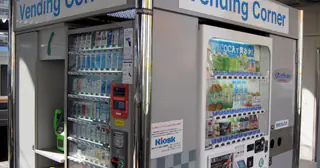
A 50-something engineer used his severance pay to buy 40+ vending machines: registered in January 2024, took over in August, targeting double the sales
OfflineMost read
- 1
Payout: A Class-Action App Vibe-Coded in 14 Days Reached $1,003,227 ARR in 9 Months. It Cost About $10 to Build, and a Partner With 10 Million Followers Grew It
29 recent visits - 2
From 30 yen in revenue to 8 years later: how running 3 apps in parallel got an indie developer to 200,000 yen a month
27 recent visits - 3
Starter Story: The $91.7K/Month Startup Case-Study Media Acquired by HubSpot — Months After the Founder Tweeted "HubSpot Should Acquire Starter Story"
26 recent visits - 4
Peak Monthly Sales of ¥1 Million on minne. A Former Designer Turned Handmade Artist Explains the Craft of "Photos That Sell"
22 recent visits - 5
Instatus: $48K MRR with Every Metric Public, After Dropping "Sup" and Repricing Upmarket
22 recent visits
Latest articles
- 2026-10-08
VMagicMirror: ¥10M on BOOTH While Giving Away Nearly Every Feature for Free
- 2026-10-08
Native: A Lawyer Who Couldn't Read His Deodorant Label Sold His D2C Brand to P&G for $100M Cash in About 2.5 Years
- 2026-10-08
10Beasts: An 8-Article Amazon Affiliate Site Hit $80K/Month in 9 Months — Sold for $570K, Google Penalty 17 Days Later
- 2026-10-07
Repsona: Five Years Solo, ¥12.4M Total Revenue — The Open Ledger of a Task-Management SaaS Its Maker Calls a "Startup Failure"
- 2026-10-07
Bargaineering: From Cents a Day to a $3M Sale in Five Years