
SaaS case studies: revenue and exits
SaaS (Software as a Service) is software sold as a monthly or annual subscription. Small Start records the revenue, ARR, sale prices and acquisition channels of SaaS businesses run by individuals and small teams, each with a source.
Recurring revenue makes SaaS numbers look stable. The archive also holds the other side: an MRR that decayed 90% through neglect, and a deal that died after six months of due diligence.
- Case studies
- 131
- Sale price
- 120億円
SaaS cases
1–24 of 131

Repsona: Five Years Solo, ¥12.4M Total Revenue — The Open Ledger of a Task-Management SaaS Its Maker Calls a "Startup Failure"
The developer of Japanese task-management SaaS Repsona published five years of numbers: total revenue of ¥12,403,567, 5,873 registered spaces, 14,641 cumulative users. Ads cost ¥500 per signup, but free-to-paid conversion was about 1%. A look inside his self-assessment: "a great success as a hobby, a big failure as a startup."
WooThemes: The Cape Town WordPress Theme Shop Whose $30M+ Exit Was Earned by a Late-Born "Internal Plugin" — WooCommerce
WooThemes, the South African WordPress theme company, was sold to Automattic in May 2015. Per Re/code's reporting, the consideration was over $30M in cash and stock. What carried the bootstrapped three-founder company to its exit was WooCommerce, the e-commerce plugin it launched belatedly in 2011. At the sale: 55 people across ~20 countries.
An Anonymous Solo Developer's ERP Integration SaaS: ~¥3M MRR with Zero Employees, Zero Ad Spend — and No Hand-Written Code for Six Months
A middleware SaaS that converts legacy ERP SOAP/XML interfaces into modern REST APIs reached roughly ¥3M in MRR with zero employees and zero ad spend, its operator disclosed on Zenn. For the past six months every line of code has been written by Claude Code. SEO posts targeting error messages drive acquisition. The operator is anonymous, so the figures cannot be externally verified.
Wufoo: The Form-Builder SaaS That Raised Only $118K in Angel Money and Sold for $35M Five Years Later
Form-builder SaaS Wufoo was sold to SurveyMonkey in April 2011. According to TechCrunch, the price was $35M in cash and stock. A 2006 Y Combinator company, it raised only $118,000 from angels — and in five years without another round, over $100M in payments flowed through its forms.

Podscan: $4,000 in the Red Every Month, Two Months After Declaring Profitability — Arvid Kahl's Second Act Is a Fight With GPU Bills
Podscan, the current venture of FeedbackPanda seller Arvid Kahl, transcribes 50,000 podcast episodes a day. One month in: $300 MRR against $2,000 in costs. Profitable after one year — then a big-customer churn flipped it to $6,000 MRR against $10,000 in expenses. He narrates the whole ride, weekly and in public.

Directify: $85,000 Buyout, MRR Fell 20% in Handover, $50K ARR Seven Months Later
Directify, a no-code directory-site builder, was sold to an individual buyer for $85,000 in February 2026 while doing $2,000 MRR. Keeping his nine-to-five, the buyer brought revenue back from the $1,600 it sank to during handover and reached $50K ARR in seven months. As of the six-month mark, roughly $70,000 of the purchase price was still unrecovered.

Podsqueeze: $6.5K MRR in 2 Months, $16K in 18 — the Launch Playbook of an "AI Wrapper" for Podcasters
Built by a two-person team in Lisbon, Podsqueeze turns podcast audio into show notes, social posts and newsletters. It hit $6.5K MRR two months after launch, $11K in monthly revenue at five months, and $16K MRR at 18 months — a measured record of how far distribution can carry a so-called AI wrapper.

Typebot: Stuck at $100 MRR for 8 Months, Then Open Source and a Brazilian Tailwind Took the Solo SaaS to $623K a Year
Typebot, a chatbot builder run solo by French developer Baptiste Arnaud, made just $100 MRR in its first 8 months. A lifetime deal brought in $23K, an open-source rebuild reset the trajectory, and MRR went from $2.7K (Dec 2022) to $31K (Oct 2023). Estimated 2024 revenue: $623.1K.

Senja: A Testimonial SaaS to $800K ARR — Two Founders in Nigeria and London Who Never Met in Person
Senja, a testimonial-collection tool, was run by developer Wilson Wilson in Nigeria and marketer Olly in London — who never met in person. MRR grew from $100 (Aug 2022) to $50,000 (Oct 2024), reaching $800K ARR by May 2025, when Wilson sold his shares to Olly and stepped away.

Oh Dear: $1M ARR, two founders, zero employees
Mattias Geniar and Freek Van der Herten started this website monitoring SaaS as a side project in 2017. Eight years later it passed $1M ARR with no employees and no funding, still just the two of them. Day one brought about 20 paying users from a 500-person list and roughly $1,500 in monthly revenue.
Pirsch Analytics: One-Employee GA Alternative Grows MRR From $11,000 to $14,300, Publishing Its Numbers Every Year
German cookieless analytics tool Pirsch Analytics published its 2025 numbers: MRR grew 24% from ~$11,000 to ~$14,300, paid subscribers went from 553 to 627, and annual net sales were about $130,000 — all with one employee plus two co-founders helping part-time in year five.

Fomo: a $10,000 MRR widget bought on seller financing, a best month of $154,000, and a seven-figure sale to Relay Commerce six years later
Ryan Kulp bought the social proof widget Notify at roughly $10,000 MRR in 2016, relaunched it as Fomo, and ran 39 consecutive months of growth to a best month of $154,000. Revenue at the 2022 sale to Relay Commerce was $107,200 a month. Both the purchase price and the sale price stay undisclosed.

Instatus: $48K MRR with Every Metric Public, After Dropping "Sup" and Repricing Upmarket
The first version, "Sup," never got a single paying customer. Founder Ali Salah threw away the name and the brand, repositioned toward larger companies, and raised prices. $5K MRR in February 2022; per the public metrics page, most recently $48,017 MRR and 1,248 paying customers. A solo status-page SaaS growing with its numbers in the open.

NinjaPear: After LinkedIn Sued His $10M ARR Company, the Founder Rebuilt in Two Weeks and Reached $15,000 a Month in Six Months
Steven Goh grew Proxycurl, a LinkedIn scraping API, to about $10M ARR before LinkedIn sued in January 2025. He settled and sold to a competitor. NinjaPear, a B2B data API he rebuilt in two weeks with Claude Code, reached 1,036 users and $66K ARR in 54 days, then $15,000 a month within six months.

SEOTesting: Ditching the Name Sold "2.5 Years' Worth" in 9 Months — Renaming and Rebuilding the Free Tool SanityCheck to $18K MRR and 330 Customers
An internal tool for his own site was released free, monetized five months later at $10/month, and stalled at a few thousand dollars. Nick Swan of the UK spent $2,500 on the SEOTesting.com domain, renamed and rebuilt the product from scratch, and matched SanityCheck's 2.5 years of revenue within 9 months. As of September 2022: over $18K MRR and 330+ customers.
Closet Tools: A Tool That Just Automates Poshmark Sharing, Making $30-40K a Month — a Solo SaaS Built in the 5 AM Hours at a Single $30 Price
It started as a 30-line script to help his wife sell on Poshmark. After three years of self-teaching from 5 to 7 AM, Jordan O'Connor launched Closet Tools in February 2018, reached $38K/month and 1,500 customers by late 2020, and was still in the $30-40K MRR range in 2023. The price has stayed at $30/month, and acquisition runs almost entirely on SEO.

Canny: $3.5M to $3.3M in Year 7, the First Decline the Feedback SaaS Published Anyway
Canny, the user-feedback management SaaS, has published its ARR annually since founding — and in year 7 (2023) reported its first decline, $3.5M to $3.3M, without hiding it. $0 raised, 17 people. A year-in-review you can follow in numbers, down to the free-plan launch that halved paying customers overnight while more than doubling ARPU.
Hypefury: A 3-Day MVP That Hit $23K MRR in 2 Years — a Twitter Tool Where Social Drives Only 2% of Traffic
Hypefury, the X (Twitter) scheduling tool, started as an MVP built in 3 days and grew from $500 MRR in December 2019 to over $23K by September 2021. A price increase took it from $13K to $19K; SEO brings 45K monthly visits. The two founders disclosed a counterintuitive acquisition mix: only 2% of traffic comes from social.

Balsamiq: 16-Year-Old Wireframing Tool Publishes Its Own $6.58M Revenue — Including an "Intentional Decline"
Wireframing tool Balsamiq, bootstrapped since 2008, published its 2024 revenue of $6.58M (down 6% YoY) on its own blog — calling the dip "expected" and forecasting another intentional decline for 2025. A look at why a single-product veteran keeps publishing numbers even in down years.

Missive: $8M ARR in 10 Years, Bootstrapped on Another Business's Profits
Missive, the collaborative email SaaS built by three co-founders on the profits of their other business ConferenceBadge, took two years to start charging and four to turn profitable — then hit $1M ARR in 2021 and $8M ARR with 16 people and 4,500+ customers by 2025. Zero ad spend; comparison pages and an affiliate program drove growth. A record of the "slow SaaS."
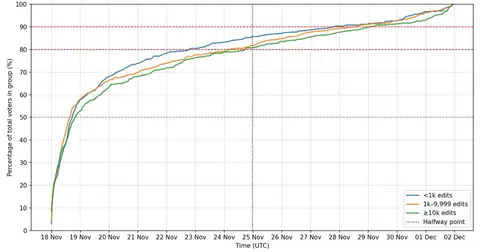
Simple Analytics: The GA Alternative Streaming Its $51K MRR and 1,328 Customers Live — Year Eight After a #3 Product Hunt and #1 Hacker News Launch
Simple Analytics, a privacy-focused Google Analytics alternative, keeps its numbers on a public dashboard: ~$51.1K MRR, 1,328 paying customers, $613.8K ARR. A 2018 launch that hit #3 on Product Hunt and #1 on Hacker News brought its first 30 customers; $30K ARR came in 13 months. Real measured figures from year eight.

Ghost: The Open-Source CMS That Made Itself Legally Unsellable — $11M ARR as a Nonprofit, With Revenue and Churn Streamed Live
Ghost, the open-source CMS, chose a nonprofit structure whose legal constitution makes the company impossible to buy or sell. It publishes ARR of $11,055,673, 30,557 paying customers, and 2.92% net churn live on its website, reinvesting 100% of revenue into the product. A record of the "unsellable company" — 41 people, fully remote, founded 2013.

EmailOctopus: $3M ARR on 'Cheaper' Alone in a Crowded Market — Ads Only After $22K MRR
EmailOctopus started as a side project in 2014 and grew in the shadow of the Mailchimp empire with a single weapon — the same thing, cheaper — reaching $1.6M ARR with a team of 9 in 2021 and over $3M ARR by 2023. The initial investment was a domain and an outsourced logo. Down to the sequencing — ads only began after hitting $22K MRR — this is a textbook of unglamorous execution.

Rezi: From a $9.69 Word Template to $257K MRR in 10 Years — an AI Resume SaaS Whose Slow Start Can Be Verified on Stripe
Rezi began in 2015 selling a $9.69 Word template; ten years on it has reached $257,935 in MRR, $9.9M in cumulative revenue, and 10,689 active subscriptions (verifiable via a Stripe integration). It adopted GPT-3 for resume generation at the earliest stage and eventually landed an enterprise deal with Google — a record of slow success.
FAQ
- How much can a solo SaaS founder earn?
- Documented cases include BuiltWith at $14M/year run by one person, and Sidekiq at $7M+/year on an open-source-plus-paid model — alongside a cold-email SaaS whose MRR fell from $2,800 to $340.
- What do small SaaS businesses sell for?
- Recorded deals range from Potion at $300K between individuals, to Boardroom Insiders at $25M on $5M ARR, and AppArmor taking $40M all-cash. Bootstrapped SaaS deals here cluster around 3–6x annual revenue.