
Grid Finder: A Zero-Revenue Sim-Racing Community Sold for £3M (About ¥600M) — “Value Without Revenue”
Grid Finder, a community platform that helps sim racers find online races, sold to RAFA Racing Club for £3M (about $4M) — while it still had zero revenue and 50,000 registered users. The unusual path there: during a third funding round, an existing investor proposed buying the company outright instead of putting in more capital.
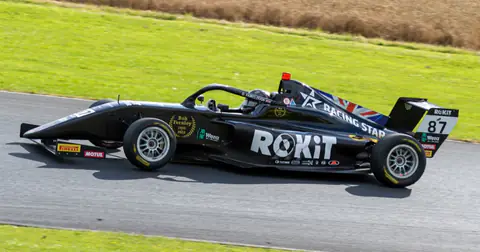
A company with zero revenue got a price tag of £3M (about $4M, roughly ¥600M). And the buyer was an existing investor — the very party it had been negotiating with over a funding round. The sale of Grid Finder, a community platform for sim racing, is a case where you can observe, with firsthand testimony, both “the conditions under which a pre-revenue business gets valued” and “the moment a funding negotiation turns into an acquisition.”
The Sale in Numbers
| Item | Figure |
|---|---|
| Sale price | £3M (about ¥600M) — mostly cash plus options, paid over three years |
| Revenue | Zero (pre-revenue) |
| Users | 50,000 registered (as of 2023); over 4,000 race events a year |
| Funding raised | £620,000 (about ¥125M) in angel money |
| Of which, from RAFA | £320,000 via Maximo Capital (2022) |
| 3rd funding-round target | £1.2M–£1.5M (converted into an acquisition before completion) |
| Buyer | RAFA Racing Club (an existing investor) |
| Timing | Agreed October 2023, closed December 2023 |
A Platform Born on a Ship
Founder Tom Bunten is a former British Royal Navy officer who was working aboard a merchant ship during the pandemic. That’s where he came up with the idea for a platform where sim-racing (realism-focused racing game) players could search for online races and track their own results. Sim-racing events were scattered across Discord servers and forums, with no cross-cutting place to “find a race to run tonight.”
The initial version was a simple site built on Wix. Chris Honniball, an Ohio-based gamer and software developer who encountered that early version in 2021, took on the development side, and Nikhil Patel, whom Bunten met at a Newcastle networking event in 2022, joined next, rounding out the three-person team. A patchwork team (a former military officer, a developer living overseas, and an operator met at a networking event) grew the platform into a community with 50,000 registered users and over 4,000 races a year.
What’s notable is that revenue stayed at zero the whole time. Grid Finder deliberately deferred monetization, building up only the number of races listed and the number of registered users. That is, the depth of the community. Operating funds came from £620,000 in angel money. The first angel investor was Kevin Beales, and in 2022, RAFA Racing Club, which runs luxury motorsport clubs, invested £320,000 through its investment arm, Maximo Capital. At that point, RAFA was just one investor among others. A revenue-free business was able to keep running for three years precisely because it had raised capital, which is why the premise here differs from an unpaid individual side project.
“We’re Not Interested in Investing Further. We Want to Buy the Whole Company.”
The turning point was the third funding round, targeting £1.2M–£1.5M. At the negotiating table, RAFA founder Rafael Martinez told Bunten that a small additional investment no longer appealed to him, and instead floated the idea of a strategic acquisition. The funding round converted directly into an M&A negotiation.
In the negotiation, the existing angel investors demanded a return of 3x their initial investment. The final terms: £3M, mostly cash, paid over three years. It was agreed in October 2023 and closed in December, the funds landed on the afternoon of December 22, just before banks closed for the year.
What Did the Buyer Actually Buy?
Paying ¥600M for a zero-revenue business can’t be explained by discounted-cash-flow math. What RAFA bought wasn’t a P&L statement. It was 50,000 sim racers’ worth of “organized enthusiasm.” A community where more than 4,000 races are actually held each year and results data has accumulated has a different quality of asset than an account with a mere follower count. As we saw with the sale of Really Good Emails, a strategic buyer prices a deal on “what it’s worth once connected to our existing business,” which is how a figure detached from market rates can happen. For a luxury motorsport club, a sim-racing community is the doorway to a future membership base, an asset that would take years and ad spend to build from zero on your own. It runs on the same principle as a domestic case where a zero-revenue Instagram camping account sold for ¥300,000, just four orders of magnitude bigger.
There’s another structural point here: an investor is always the first candidate for acquisition. RAFA, having already put in £320,000 through Maximo, already knew the business’s inner workings as a shareholder, which made due diligence costs extremely low. A funding negotiation is also a venue for information disclosure, and that disclosure doubles as groundwork for a potential acquisition. Any funding-round table always carries the possibility of turning into “an acquisition instead of an investment.”
What Happened to the Three Founders After the Sale
Behind the glamour of a pre-revenue sale, what followed wasn’t smooth. All three founders initially stayed on (salaries negotiated separately), but Honniball left after six months. Patel moved not to Grid Finder itself but to RAFA’s parent organization. Only Bunten has continued as CEO through the full three-year earnout period. The combination of installment payments and an earnout is also a mechanism that locks founders under the buyer’s umbrella for three years. The £3M headline figure isn’t “money you’re immediately free to use.”
Bunten’s own lesson: “If you’re planning to stay on after the acquisition, make sure the buyer’s vision is fully aligned with yours.” The same conclusion that catnose weighed most heavily when choosing a buyer for Zenn also emerges here, from an overseas pre-revenue sale.
Conditions for Replication: How Far Does This Exit Generalize?
The reusable part is the structure. (1) A community a buyer can’t build on their own gets valued as an asset even without revenue. (2) That valuation is determined solely by “the buyer’s strategic need,” so there’s no general market rate. (3) Existing investors and existing business partners are the lowest-negotiation-cost buyer candidates.
The amount and the probability are another story. The £3M happened because a business that desperately wanted a niche 50,000-person community as “the doorway to a membership business” happened to already be sitting on the shareholder list. With the very same community, if no strategic buyer had appeared, no price would have been set at all. For anyone running a community or media outlet in Japan, the realistic translation isn’t “try to reproduce this,” but rather to design your information disclosure and relationship-building on the premise that “anyone you negotiate with over funding or partnerships is also a potential future buyer.” Zero revenue, in this case, wasn’t a flaw. It functioned as the condition under which “valuation is set purely by strategic value.” And that’s a hair’s breadth from sheer luck.
Also Worth Reading
- Really Good Emails — the structure by which a “strategic buyer” breaks the going rate
- A zero-revenue camping Instagram account sold for ¥300,000 — the same principle, a domestic mini-version
Sources
Similar cases

Parenting Media Site Red Tricycle Sold for $6.5M — Riding Out the "Winter of Ad-Supported Media" Through the Exit
Blog/Media
Park Place Payments: 7 Full-Time Staff, 1,500 Independent Agents — a $3M/Year Payments Business Sold for $7M, Only $2.3M Guaranteed
Other
Baremetrics: The First Buyer Vanished After 6 Months of Due Diligence — the Road to a $4M All-Cash Sale One Year Later
SaaS
¥8,980/Month × 15,000 Members = ¥126M Monthly Revenue: Testing the Ceiling of Japanese Online Salons
CommunityMost read
- 1
Payout: A Class-Action App Vibe-Coded in 14 Days Reached $1,003,227 ARR in 9 Months. It Cost About $10 to Build, and a Partner With 10 Million Followers Grew It
29 recent visits - 2
From 30 yen in revenue to 8 years later: how running 3 apps in parallel got an indie developer to 200,000 yen a month
27 recent visits - 3
Starter Story: The $91.7K/Month Startup Case-Study Media Acquired by HubSpot — Months After the Founder Tweeted "HubSpot Should Acquire Starter Story"
26 recent visits - 4
Peak Monthly Sales of ¥1 Million on minne. A Former Designer Turned Handmade Artist Explains the Craft of "Photos That Sell"
22 recent visits - 5
Instatus: $48K MRR with Every Metric Public, After Dropping "Sup" and Repricing Upmarket
22 recent visits
Latest articles
- 2026-10-08
VMagicMirror: ¥10M on BOOTH While Giving Away Nearly Every Feature for Free
- 2026-10-08
Native: A Lawyer Who Couldn't Read His Deodorant Label Sold His D2C Brand to P&G for $100M Cash in About 2.5 Years
- 2026-10-08
10Beasts: An 8-Article Amazon Affiliate Site Hit $80K/Month in 9 Months — Sold for $570K, Google Penalty 17 Days Later
- 2026-10-07
Repsona: Five Years Solo, ¥12.4M Total Revenue — The Open Ledger of a Task-Management SaaS Its Maker Calls a "Startup Failure"
- 2026-10-07
Bargaineering: From Cents a Day to a $3M Sale in Five Years