
WFH Advisor: A Pandemic-Era Side Project Sells for 34x Monthly Revenue — How to Exit a “Trend Niche”
WFH Advisor, an information site about remote work setups, was launched as a side project by three co-founders during the pandemic, grew through SEO, and was sold for 34 times its monthly revenue. A concise case illustrating the standard lifecycle of a niche site riding a trend.
What Happened
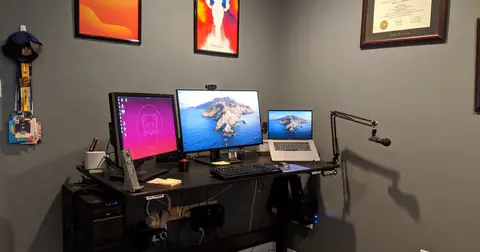
WFH Advisor is an information site covering remote work (Work From Home) setups — desks, chairs, equipment, and know-how. In early 2020, at the start of the pandemic, three people working in tech launched it as a side project alongside their day jobs, captured “best desk for working from home”-type search demand through SEO, and in May 2022 sold it via the Empire Flippers marketplace for six figures in dollars (tens of millions of yen) at 34 times monthly revenue.
This isn’t a case with flashy numbers. Monthly traffic was only 15,000. But that’s exactly why it’s a valuable record: the “standard lifecycle” of a trend-riding niche site, from launch to sale, is documented here at true scale with no exaggeration. Underneath the unremarkable-looking numbers sit a series of highly replicable decisions.
A Two-Year Timeline
| Time | Event |
|---|---|
| 2020 (early pandemic) | Three co-founders launch the site as a side project |
| Within 72 hours of launch | First sale via affiliate revenue |
| 5 months post-launch | Reaches 15,000 monthly visits |
| December 2021 | Google’s Product Reviews Update temporarily reduces traffic |
| Late 2021 onward | Sale process begins (takes 6 months to close) |
| May 2022 | Sold via Empire Flippers for six figures in dollars, at 34x monthly revenue |
The speed of the launch, a first sale within 72 hours, says a lot about the nature of this model. Affiliate revenue requires no inventory and no product development, so monetization begins the moment traffic starts flowing. Put differently, that first sale doubled as instant demand validation: the three founders skipped the entire “build first, then find demand” step.
Three-Way Division of Labor and Outsourcing to Keep Fixed Costs Thin
The co-founders’ roles were clearly divided. Jim Campbell handled SEO and technical aspects (site structure, load speed, design). Adam Naor handled promotion through guest contributions to other outlets. Kevin Hanson handled content operations, editing, and SEO optimization. Writing itself was outsourced to freelance writers, keeping overhead to a minimum. Revenue started with affiliate income in the early days and later expanded to include direct contracts with brands (advertising and sponsorships).
The main battleground for link-building was guest posting. Campbell recalled that “strategic, high-quality outreach to other sites” was what made the difference. Behind a young domain reaching commercial-grade search rankings within five months lay not mass content production but deliberate investment in link acquisition.
None of the three quit their day jobs before the sale. Keeping the site at commercial standards while limiting each person’s time commitment makes this a risk-minimized model case of a site sale as the exit for “entrepreneurship without quitting.” Read alongside Onichan’s side-project media exit in Japan, it shows the same structure playing out in both the US and Japan.
How to Read the 34x Multiple
Market rates for site sales in the English-speaking world run around 30-45x monthly revenue, so 34x falls within the standard range. According to Empire Flippers’ 2021 report, the average multiple for content sites was 31.6x. WFH Advisor came in slightly above that. Far from selling at an “exceptionally high” price, this one went for market rate. Working backward from the disclosed “six figures (i.e., $100K+)” and the 34x multiple, monthly revenue at the time of sale was at least around $3,000 (roughly ¥450,000). Reaching that revenue level on only 15,000 monthly visits likely reflects a mix of affiliate income from high-ticket items like desks and chairs, plus direct brand contracts.
What matters more than the multiple is the timing. Remote-work demand exploded with the pandemic and then began fading as offices reopened. The founders sold before a structural question mark formed over the durability of that demand, the same timing judgment as Milk Road selling while crypto was still hot, executed here at niche-site scale. The iron rule for trend-driven niches can be summed up this way: “Sell while the tailwind still looks like skill.” Buyers show up only while the growth curve points up. The moment a plateau appears in the numbers, the multiple drops a tier.
What Dragged Out the Sale — Hit Directly by an Algorithm Update
It wasn’t all tailwinds. Google’s Product Reviews Update in December 2021 temporarily hurt traffic, and the sale process stretched to six months. “Best product” review sites were squarely in that update’s crosshairs, and WFH Advisor fit the target profile exactly. The founders responded by improving E-A-T (expertise, authoritativeness, trustworthiness), restored their metrics, and then closed the deal.
This encapsulates the double risk of trend-driven affiliate sites: demand-side decay and Google’s shifting policies, neither controllable by the operator, and review sites are exposed to both at once. The 34x multiple should be read as a “market rate” that already priced in this fragility.
There’s one more operational lesson from Campbell that connects directly to the sale’s success. “Keep a record of every dollar of income and expense, and every business relationship, from day one.” In site sales, valuation can’t even begin without solid proof of revenue. Bookkeeping discipline didn’t start when they decided to sell. It started on launch day.
After the Sale — Running the Same Playbook Again
After the sale, the three founders launched Ring Advisers, a site about buying engagement rings, reusing the exact same playbook of picking a niche with search demand and launching it through division of labor and outsourcing. What they took from their first exit wasn’t just capital. It was confirmation that “this process is repeatable.”
Conditions for Replication
The portable parts: (a) a multi-person structure with day jobs that spreads out the workload, (b) minimizing fixed costs by outsourcing writing, (c) recordkeeping from day one, and (d) a sense of timing that correctly reads the nature of a tailwind and sells before it fades. None of these depend on language or market.
The environment is another matter. The sudden emergence of demand from a pandemic isn’t something you can choose to replicate, and the depth of an established marketplace like Empire Flippers is a condition specific to the English-speaking market. A site with 15,000 monthly visits finding a six-figure buyer only happens because site trading exists as a mature asset class, and this difference in liquidity is exactly what Japanese readers should discount most heavily.
Related Reading
- Onichan’s side-project media exit — A domestic case of the same pattern
- Milk Road — The large-scale version of “sell while it’s hot”
Sources
- Founder They Got Acquired(個別記事)
Similar cases

The Wirecutter: $30M+ From The New York Times, 5 Bootstrapped Years by an Ex-Gizmodo Editor
Affiliate site
10Beasts: An 8-Article Amazon Affiliate Site Hit $80K/Month in 9 Months — Sold for $570K, Google Penalty 17 Days Later
Affiliate site
Tenshoku Antenna: A One-Person Media Site, ¥700M Plus a ¥300M Earnout from Listed Company Logly
Affiliate site
Investor Junkie: Nine Years, Not a Single Outsourced Article, 80% SEO — a $5.8M Sale, and the $1.3M Resale That Followed
Affiliate siteMost read
- 1
Payout: A Class-Action App Vibe-Coded in 14 Days Reached $1,003,227 ARR in 9 Months. It Cost About $10 to Build, and a Partner With 10 Million Followers Grew It
29 recent visits - 2
From 30 yen in revenue to 8 years later: how running 3 apps in parallel got an indie developer to 200,000 yen a month
27 recent visits - 3
Starter Story: The $91.7K/Month Startup Case-Study Media Acquired by HubSpot — Months After the Founder Tweeted "HubSpot Should Acquire Starter Story"
26 recent visits - 4
Peak Monthly Sales of ¥1 Million on minne. A Former Designer Turned Handmade Artist Explains the Craft of "Photos That Sell"
22 recent visits - 5
Instatus: $48K MRR with Every Metric Public, After Dropping "Sup" and Repricing Upmarket
22 recent visits
Latest articles
- 2026-10-08
VMagicMirror: ¥10M on BOOTH While Giving Away Nearly Every Feature for Free
- 2026-10-08
Native: A Lawyer Who Couldn't Read His Deodorant Label Sold His D2C Brand to P&G for $100M Cash in About 2.5 Years
- 2026-10-08
10Beasts: An 8-Article Amazon Affiliate Site Hit $80K/Month in 9 Months — Sold for $570K, Google Penalty 17 Days Later
- 2026-10-07
Repsona: Five Years Solo, ¥12.4M Total Revenue — The Open Ledger of a Task-Management SaaS Its Maker Calls a "Startup Failure"
- 2026-10-07
Bargaineering: From Cents a Day to a $3M Sale in Five Years