
AppArmor: Turning Down $20M (With Strings) and Taking $40M All Cash — the Complete Negotiation Record of a Campus Safety App
The Sinkinson brothers grew campus safety app AppArmor to $5.6M in annual revenue at a 60% margin through RFP-driven sales. They rejected a conditional $20M offer in 2021 and extracted $40M — all cash, no strings — from competitor Rave. The buyer was itself resold for $560M a year later.
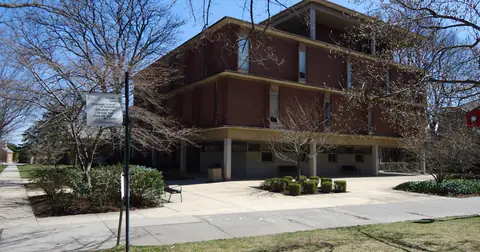
Rarely is the inside of a sale negotiation disclosed in this much detail. The amount of the first offer and the reason it was refused, the date of the counter-offer, the days from signing to money in the bank, what due diligence actually felt like, and even the additional return when the buyer itself was resold after the deal — the Sinkinson brothers of AppArmor talk through nearly everything that happens at the exit of a bootstrapped SaaS. The path from turning down CA$20M to taking CA$40M (about ¥4.8 billion) in all cash is large in scale, but the structure of the decision-making carries straight over to small sales.
Timeline
| Date | Event |
|---|---|
| 2011 | David Sinkinson, while at Queen’s University, gets the idea from an audit finding that 30% of campus emergency phone boxes were broken |
| 2012 | The brothers launch (going full-time in 2014) |
| End of 2015 | ARR of CA$1M |
| January 2019 | Wins the Colorado community college system tender (13 campuses) — begins nearly doubling every year via RFP (public tender) sales |
| 2021 | Rejects a CA$20M offer (disliked the earnout tied to hitting revenue targets) |
| November 18, 2021 | Competitor Rave Mobile Safety offers CA$40M — all cash, no complex conditions |
| January 18, 2022 | Contract signed. Money lands February 1 |
| 2022 | Transition support planned for 3 months stretches to about 7 months at the buyer’s request |
| December 2022 | Rave is acquired by Motorola Solutions for $560M, triggering an additional payout to the brothers via their phantom equity |
The Business at the Time of Sale
| Item | Figure |
|---|---|
| Annual revenue | $5.6M (CA$7M) / 60% profit margin |
| Sale price | CA$40M (US$32M) = about 6x revenue |
| Customers | 350–400 institutions, mostly universities |
| Pricing | Base CA$15K/year, CA$45–50K/year full-featured (setup fees abolished; converted from one-time licenses to subscription) |
| Team | 20 people, bootstrapped |
| Best quarter before the sale | About CA$1.5M in new recurring revenue |
The product is a campus safety app white-labeled per university (“Safe NYU,” “GatorSafe,” and so on), featuring mass emergency SMS, real-time location sharing, tip reporting, emergency response plans readable offline, and, after COVID, even vaccine attestation. Thirty percent of emergency phone boxes were broken and left that way, the product replaced that infrastructure gap with the smartphone every student already carries.
Sales by RFP, Trade Shows, and Direct Mail — No Social Media
At founding, people around them said “universities will never pay for an app.” David’s answer, in essence: “Ignore those people. Don’t seek validation from peers”, validation was sought from the market itself. Concretely: exhibiting at trade shows, bidding on RFPs (public tenders), and direct mail. Marketing via social media and blogs was ruled out from the start as a mismatch for the target, university safety departments.
The turning point was January 2019, winning the tender for the Colorado community college system’s 13 campuses. From then on, with RFP sales as the axis, “revenue roughly doubled every year” (co-founder Chris). In vertical SaaS for public and educational institutions, tenders are a brutal feedback device that renders wins and losses unambiguous, and once you crack the pattern of winnable RFPs, they become a repeatable growth engine. On pricing, they abolished setup fees and converted fully to subscription, which (as it turned out) raised the recurring-revenue ratio that acquirers value.
From Refusing $20M to Taking $40M
The first offer in 2021 was CA$20M. The problem was not the amount but the terms, an earnout tying payment to hitting specific revenue targets, and the brothers refused because of those strings. Call it a preemptive avoidance of the regret the Tweet Hunter sellers experienced with their earnout.
About half a year later, on November 18, 2021, competitor Rave Mobile Safety offered CA$40M. All cash, no complex conditions. Rave was the very party that had kept losing tenders to AppArmor, so an “acquisition to eliminate” carried competitive value. It is the same construction as the competitor that bought Honeymoons.com: the highest bidder is the party losing to you the hardest. Contract on January 18, 2022. Money on February 1. The speed, two and a half months from offer to cash, was itself a consequence of the terms being simple.
David sums up the decision this way: “In entrepreneurship, chances to lock in the win don’t come often.” An offer of that quality (all cash, no strings) was rarer than any difference in headline amount.
The Hell of Due Diligence, and a 7-Month Transition
Behind the glittering numbers, what the brothers speak about most frankly is the pain of the process. David describes due diligence as “like an FBI raid. Everything gets dragged out.” Enduring months of invasive scrutiny is a precondition of selling, and Usersnap’s habit of keeping the data room current in peacetime is effectively the only mitigation.
Transition support, initially committed at a minimum of three months, ultimately stretched to about seven at the buyer’s request. You are not free the moment the money lands. This “post-sale servitude” is worth recording as something even a clean, all-cash deal could not avoid.
It Bore Fruit Once More After the Sale — Phantom Equity
The consideration was all cash, but the brothers had also received phantom equity (synthetic shares) in Rave. When Rave was acquired by Motorola Solutions for $560M in December 2022, that stake triggered an additional payout. Secure the certainty of cash, and still hold an option on the buyer’s growth, proof that you can have both. Even looking at a resale that fetched more than six times the CA$40M sale price, the brothers did not “sell cheap.” The combination of a $40M prioritizing quality of terms plus upside participation via phantom equity was rational even in hindsight.
Conditions for Reproducing This, and Its Limits
The part of this case that travels to other deals is the architecture of the negotiation. Set your walk-away criterion on terms (the presence of an earnout), not on price. A competitor, especially one that keeps losing to you, can be your highest bidder. Build the “easy-to-buy financials” in advance: 60% margins and fully recurring revenue. These carry over regardless of scale.
The absolute number, CA$40M, has far stricter reproduction conditions: 11 years of operation, a customer base of 350–400 institutions in the public and education sectors, and a market position that cornered the buyer as “the competitor that cannot be beaten in tenders.” The RFP strategy that doubled a sales-led vertical SaaS every year cannot simply ignore the differences in procurement systems at Japanese municipalities and universities. Note also that the sellers here were two co-founding brothers with a 20-person organization. Whether a solo founder could withstand the same negotiating tug-of-war, six months of waiting after refusing an offer, is a separate question, financially and psychologically.
After the sale, the brothers went public with their experience through a podcast and a book of the same name, “Startup Different.” David’s final addition is not about numbers, “Don’t forget to enjoy the journey.” As the record of an 11-year exit, that testimony carries the same weight as the figures.
Related Reading
Sources
Similar cases
Boardroom Insiders: A Solo-Founded Executive Database Hits $5M ARR, Sells for $25M — Winning With “Human-Curated Data”
SaaS
Baremetrics: The First Buyer Vanished After 6 Months of Due Diligence — the Road to a $4M All-Cash Sale One Year Later
SaaS
WooThemes: The Cape Town WordPress Theme Shop Whose $30M+ Exit Was Earned by a Late-Born "Internal Plugin" — WooCommerce
SaaS
Wufoo: The Form-Builder SaaS That Raised Only $118K in Angel Money and Sold for $35M Five Years Later
SaaSMost read
- 1
Payout: A Class-Action App Vibe-Coded in 14 Days Reached $1,003,227 ARR in 9 Months. It Cost About $10 to Build, and a Partner With 10 Million Followers Grew It
29 recent visits - 2
From 30 yen in revenue to 8 years later: how running 3 apps in parallel got an indie developer to 200,000 yen a month
27 recent visits - 3
Starter Story: The $91.7K/Month Startup Case-Study Media Acquired by HubSpot — Months After the Founder Tweeted "HubSpot Should Acquire Starter Story"
26 recent visits - 4
Peak Monthly Sales of ¥1 Million on minne. A Former Designer Turned Handmade Artist Explains the Craft of "Photos That Sell"
22 recent visits - 5
Instatus: $48K MRR with Every Metric Public, After Dropping "Sup" and Repricing Upmarket
22 recent visits
Latest articles
- 2026-10-08
VMagicMirror: ¥10M on BOOTH While Giving Away Nearly Every Feature for Free
- 2026-10-08
Native: A Lawyer Who Couldn't Read His Deodorant Label Sold His D2C Brand to P&G for $100M Cash in About 2.5 Years
- 2026-10-08
10Beasts: An 8-Article Amazon Affiliate Site Hit $80K/Month in 9 Months — Sold for $570K, Google Penalty 17 Days Later
- 2026-10-07
Repsona: Five Years Solo, ¥12.4M Total Revenue — The Open Ledger of a Task-Management SaaS Its Maker Calls a "Startup Failure"
- 2026-10-07
Bargaineering: From Cents a Day to a $3M Sale in Five Years